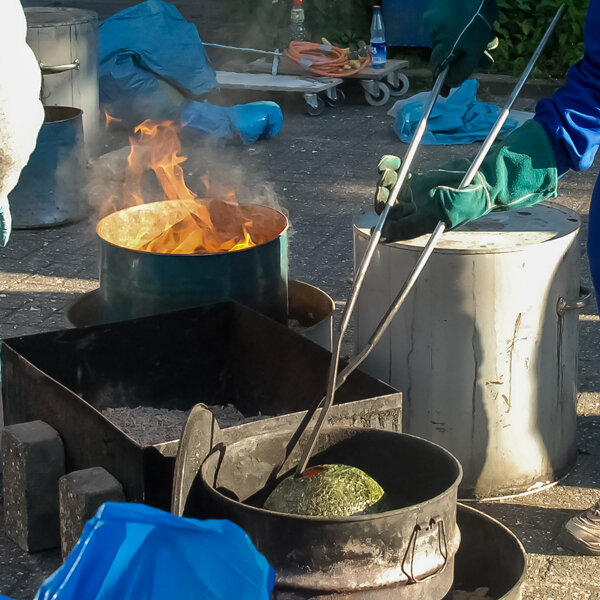
An object is quenched after cooling in sawdust in a water bath.
Hot and cold.
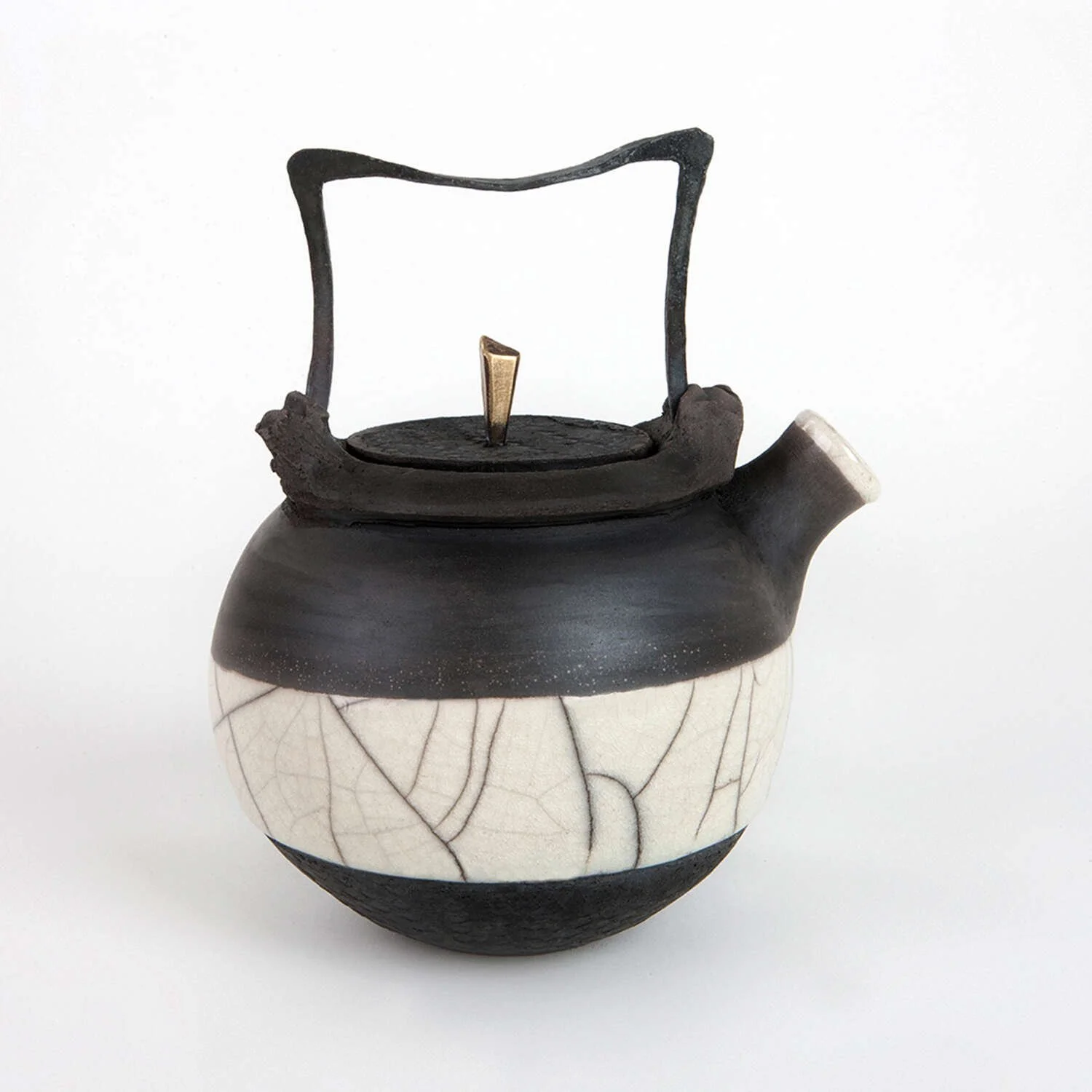
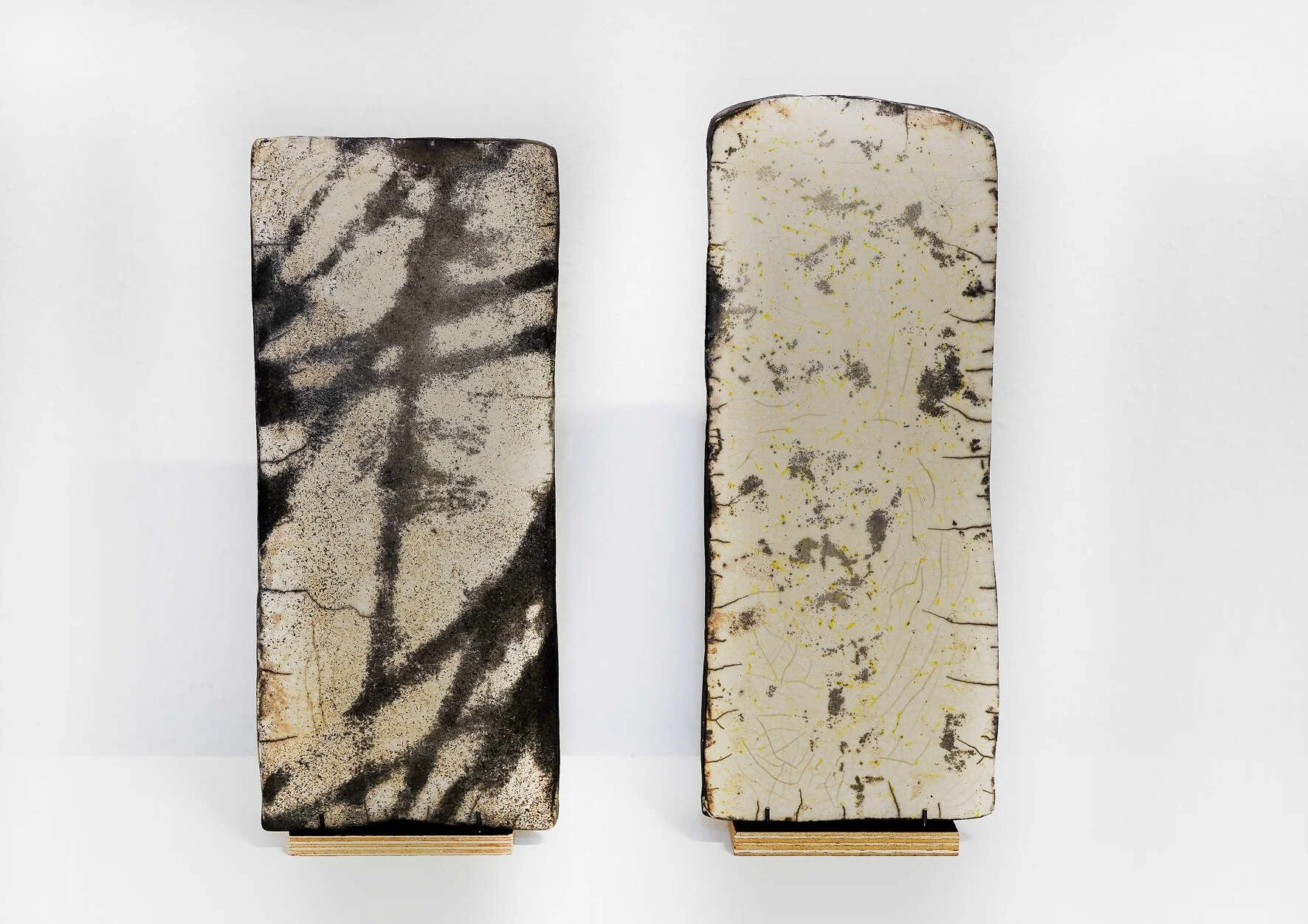
Raku is an ancient firing technique from Asia in which the low-fired (approx. 1000 °), scalded and glazed ceramics are taken red-hot from the kiln and shock-cooled in natural materials such as leaves or sawdust and then quenched in water. The flash cooling causes cracks in the glaze surface into which the soot can settle. This is how the craquelé so typical of raku is formed. Smoke and oxygen extraction create the reducing atmosphere that is responsible for the colour effects.
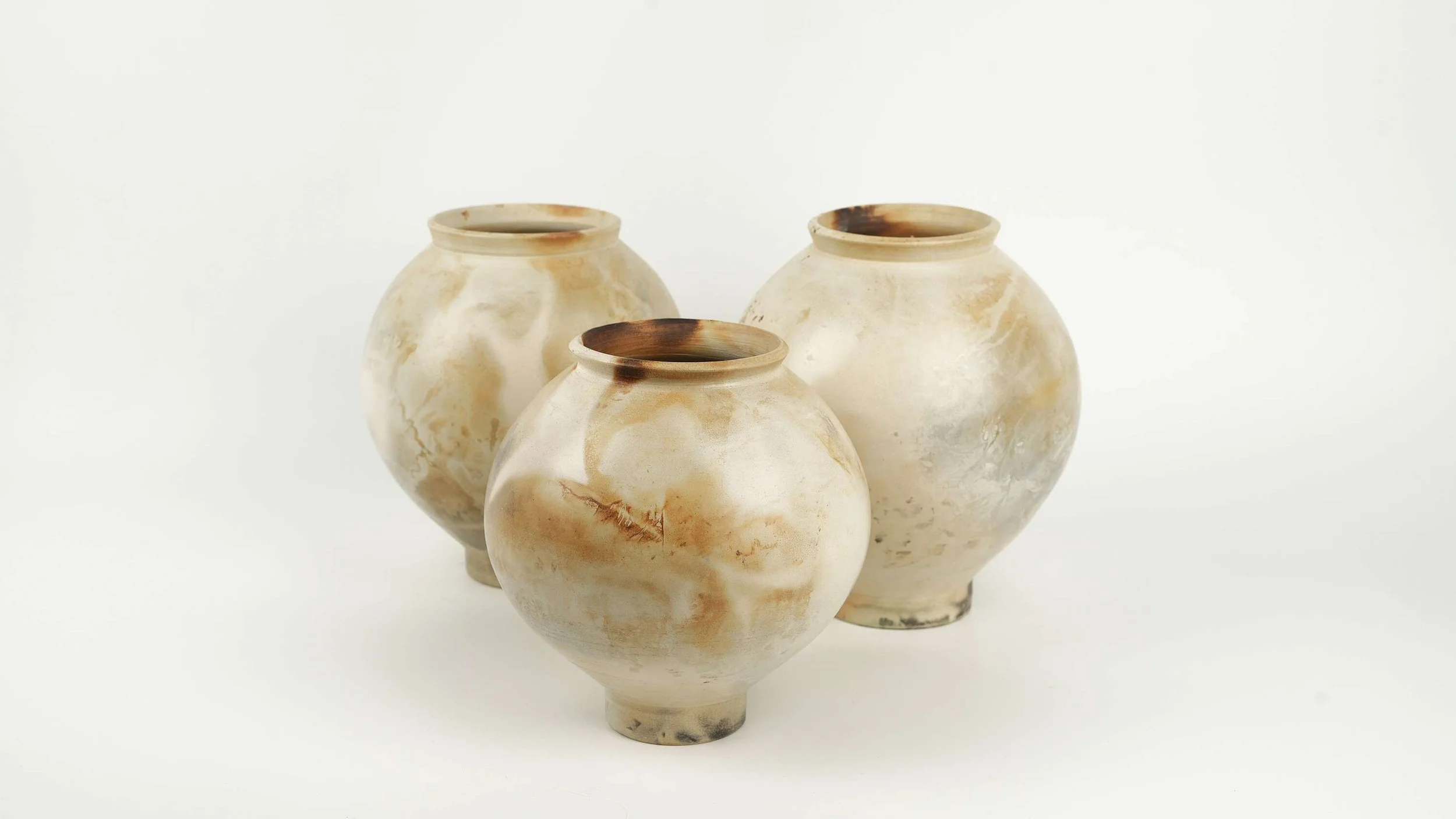
Naked Raku is a type of smoke firing in which the glaze flakes off after firing, leaving smoke marks on the naked pottery.
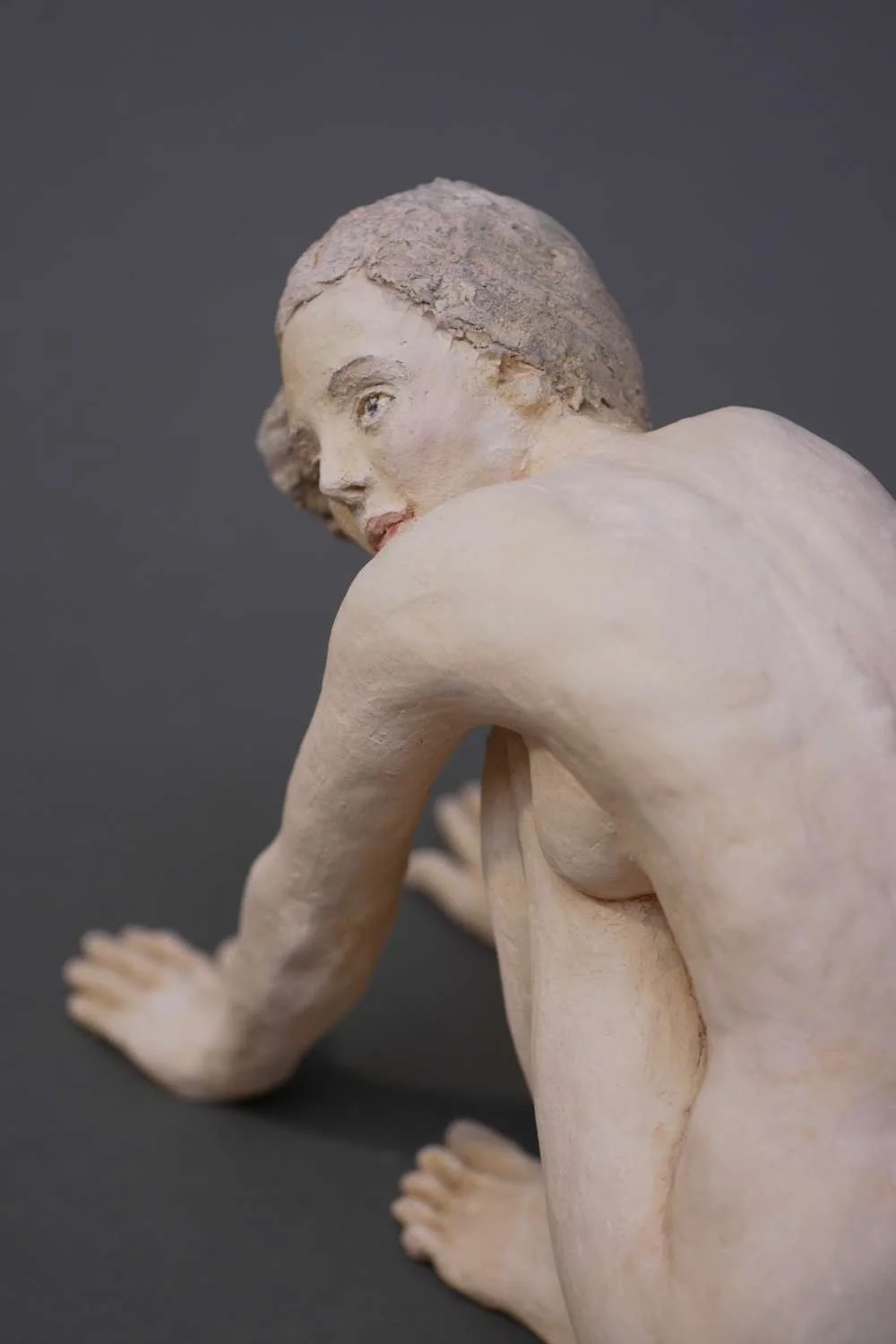
If you find raku interesting, you should take a look at these ceramists:
Ceramics Collection