
Wild Companions
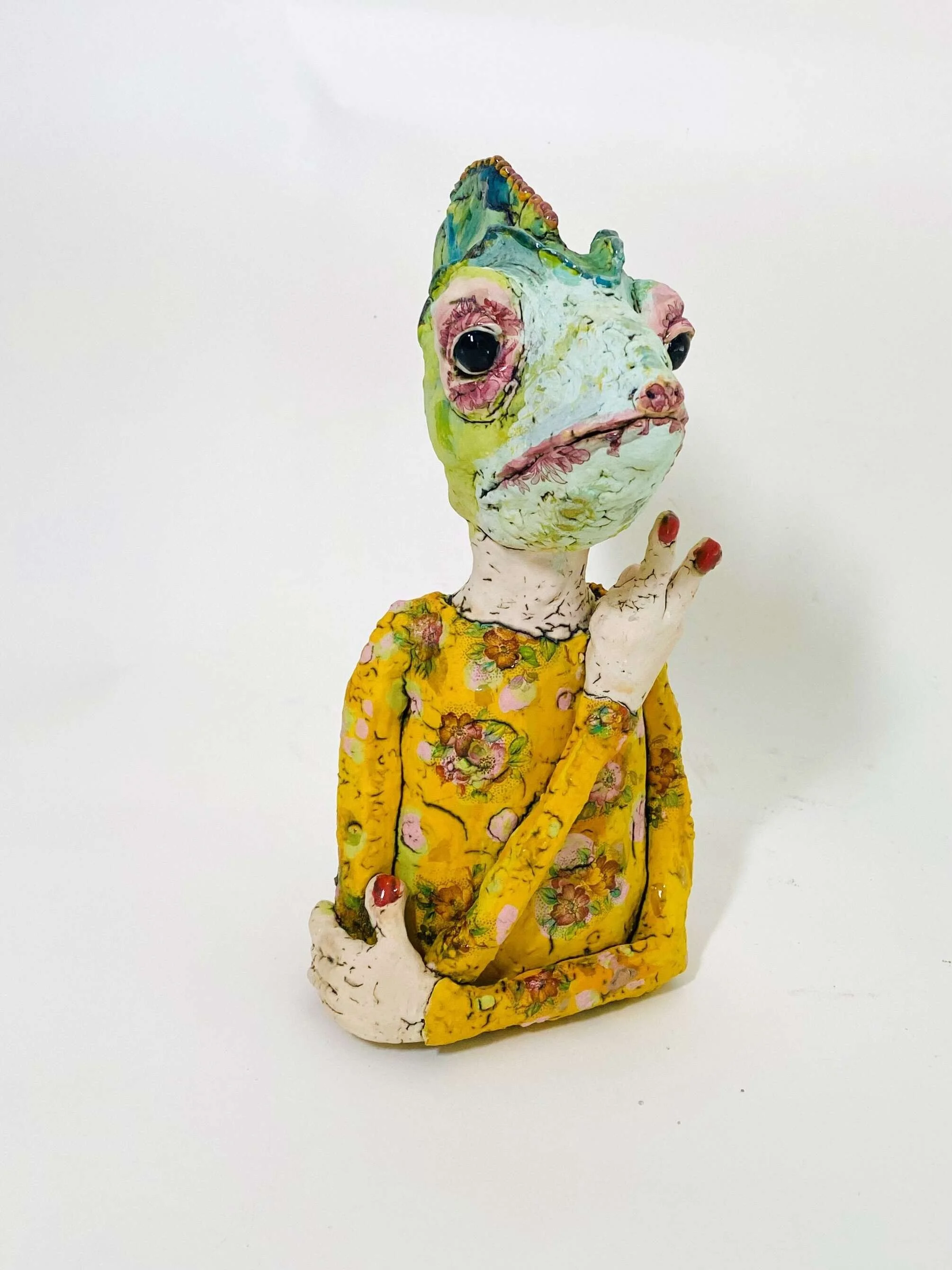
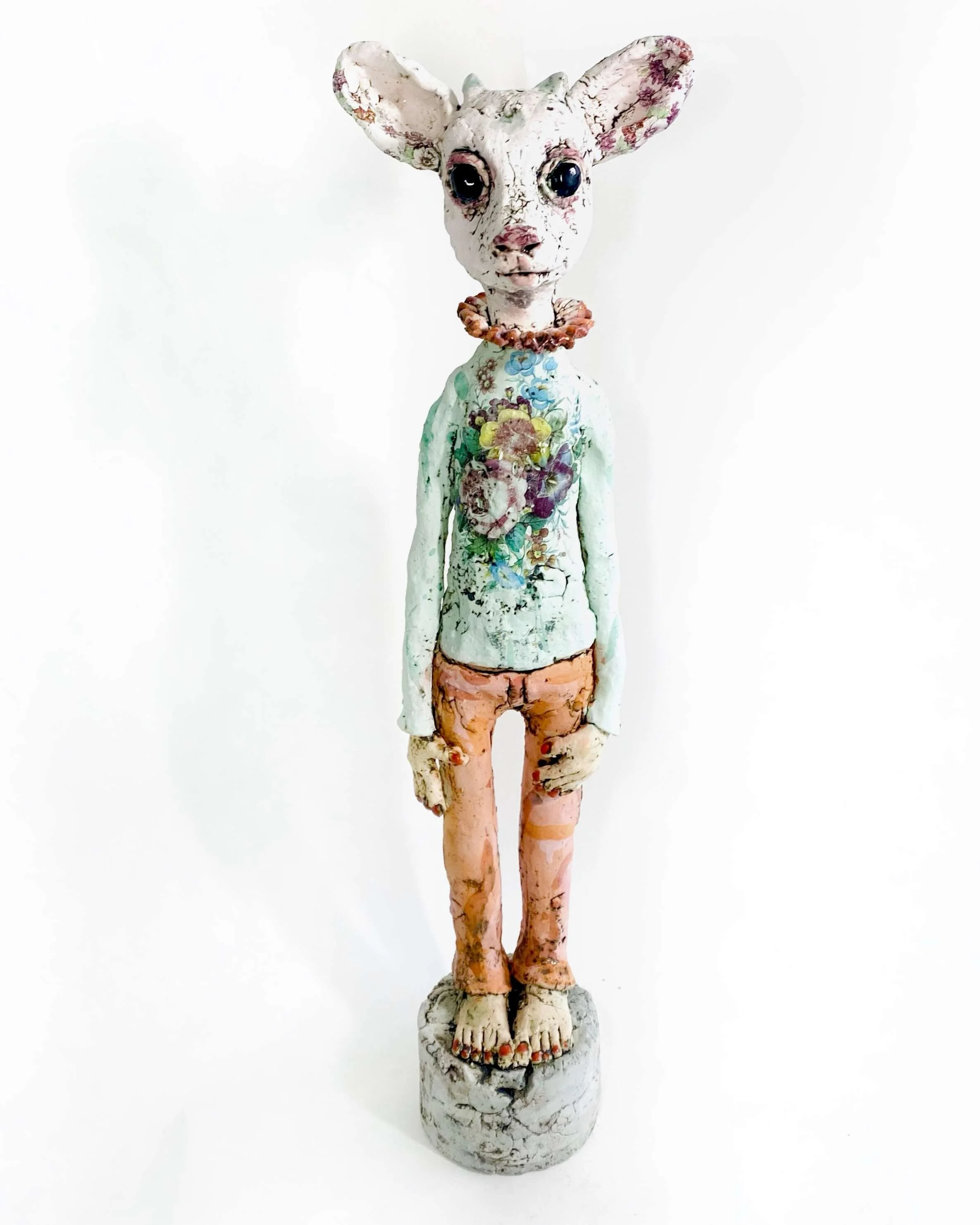
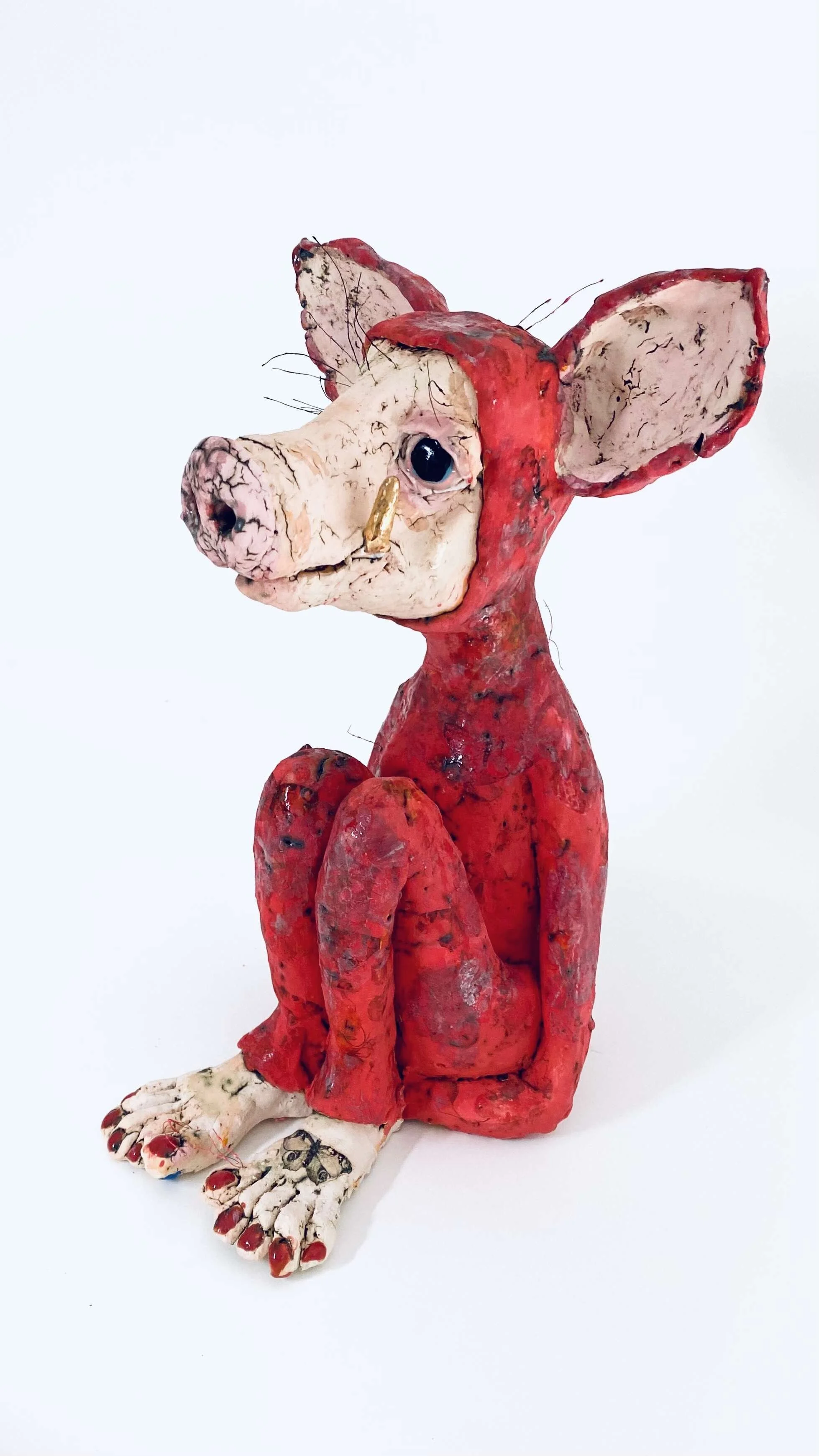
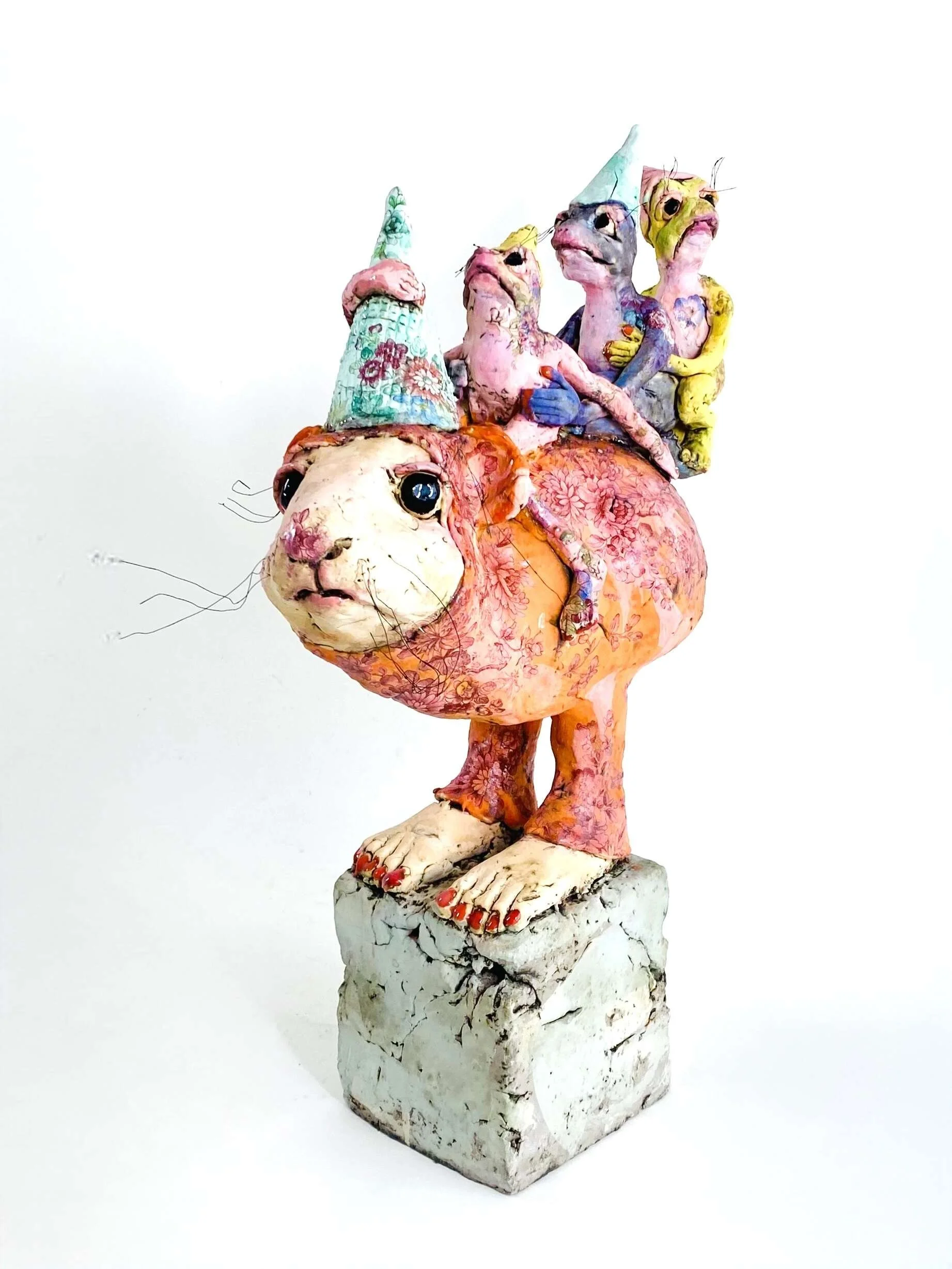
In her ceramic work, Kraml creates hybrid figures that straddle the line between human and animal. The rough, fracture-marked sculptures address fragility, vulnerability, and transience, and deliberately eschew a smooth or pleasing aesthetic. Through multiple firing processes and nuanced color and surface treatments, a multi-layered appearance emerges that underscores the figures’ fragility.
Be sure to check out Claudia Kraml at this year’s Ceramic Artist Portrait—along with Kati Jünger—on July 31 from 9:30 a.m. to 3:30 p.m. at the Werkschule. Registration: info@werkschule.de, course number: 8799.
Claudia Kraml
Eduard-Mörike-Straße 88
73266 Bissingen
+49 (0) 17680353303
info[at]claudiakraml.de
www.claudiakraml.de
@claudiakraml_sculpture
Claudia Kraml's areas of focus, clearly explained:
Glossary collection


