Form through colour
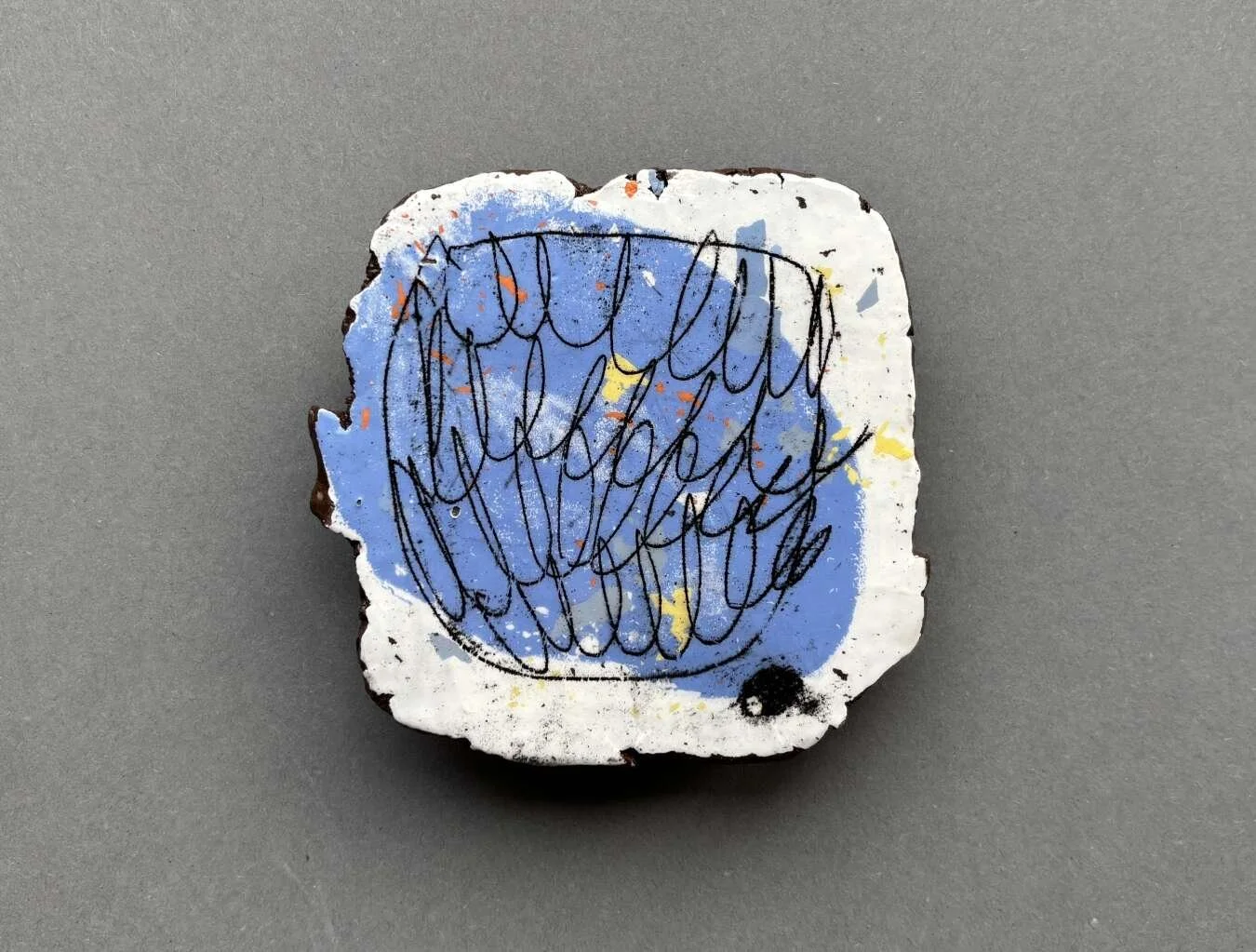
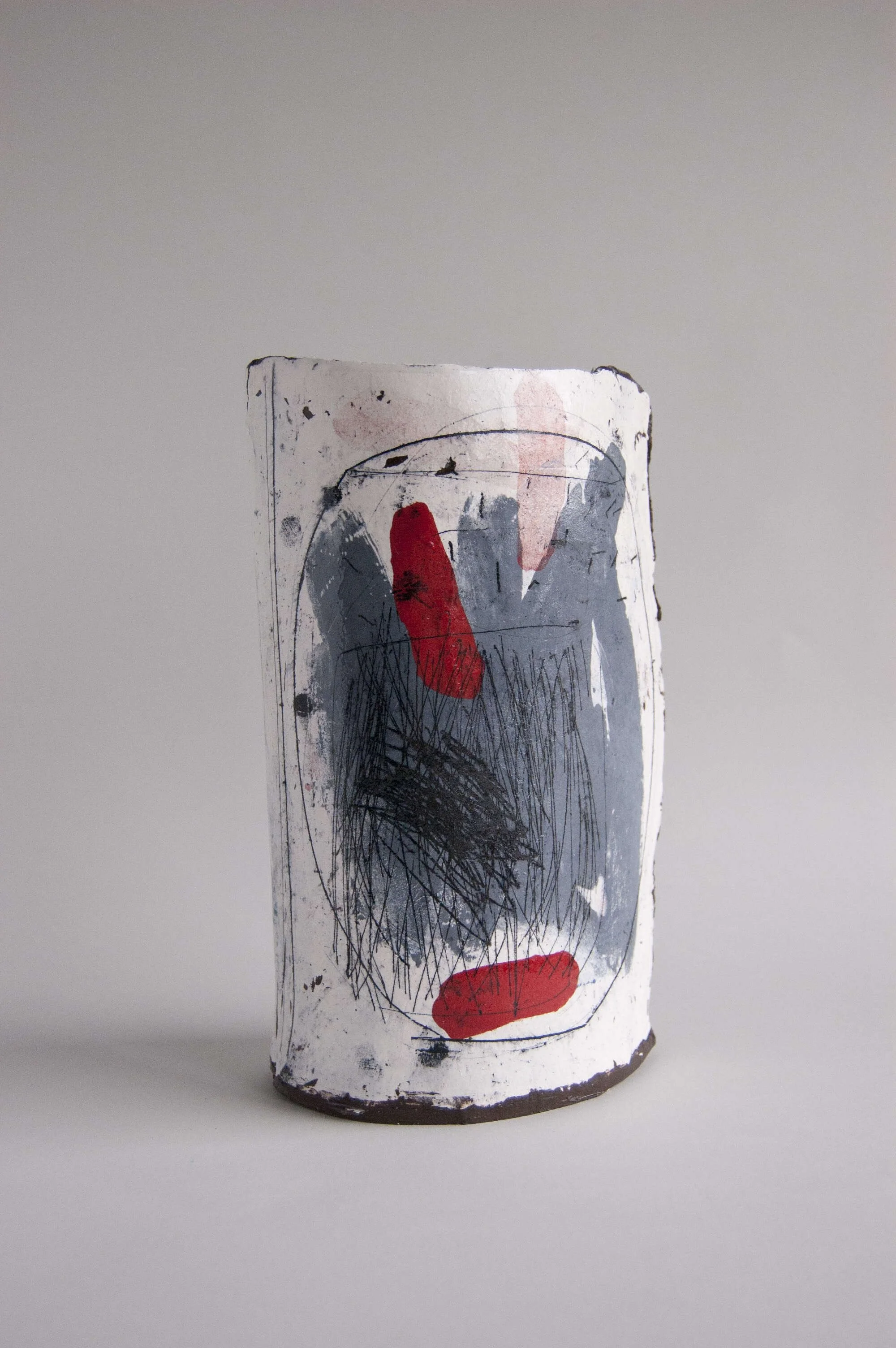
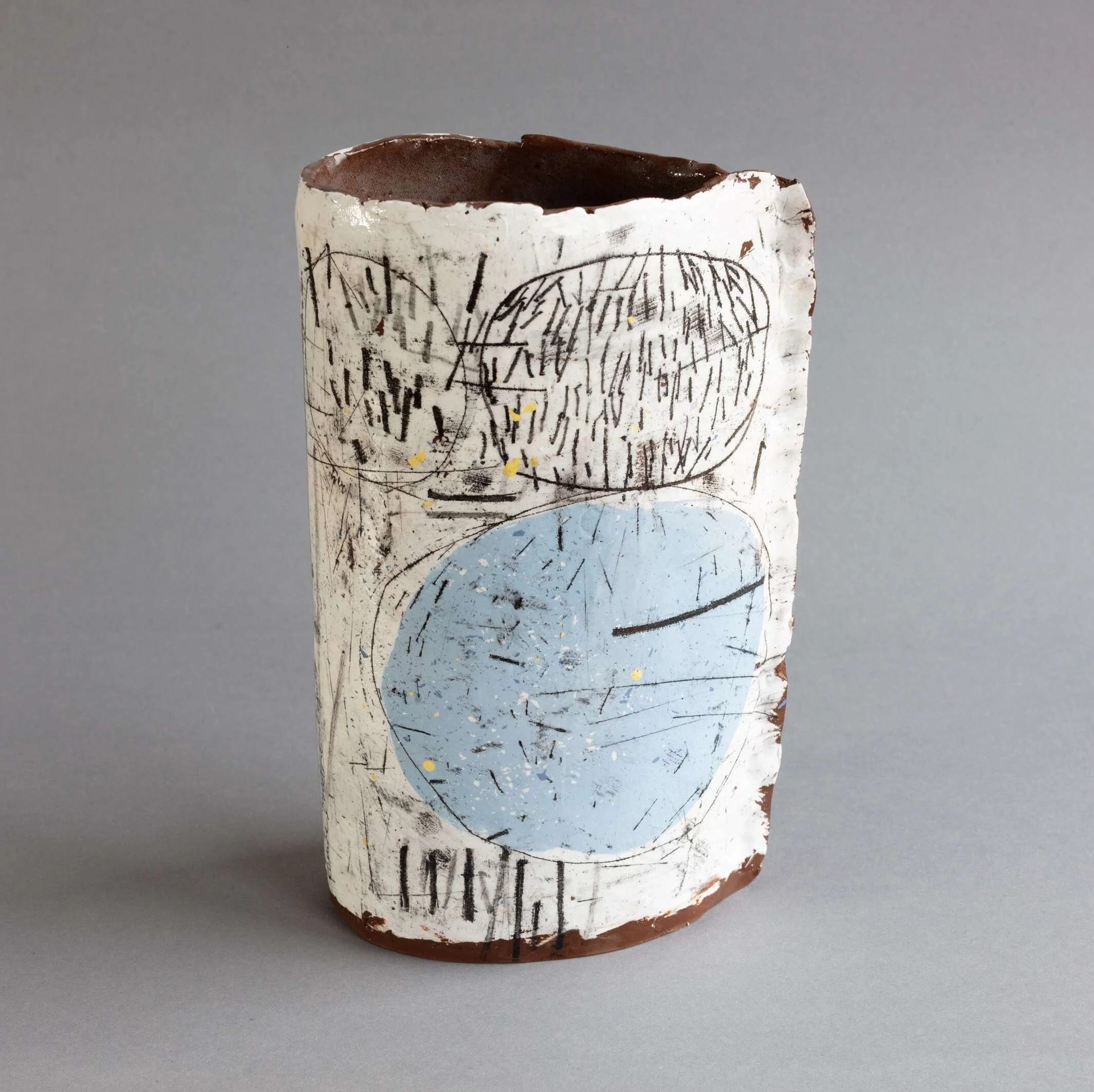
Rustically shaped wall tiles and panels in red and black stoneware clay with rough, unshaped edges and simple vessel shapes: A perfect painting ground for Kamila Dziedzic-Caputa. She uses it in the freest possible way using coloured engobes. Here she scribes, prints and draws. Her gestural, sometimes exuberantly dense design accentuates the underlying surface and gives it form.
Kamila Dziedzic-Caputa
Brzozowa 14
49-100 Niemodlin
Poland
+48 (0) 5345-7689
www.kamiladziedzic.com
kamiladz[at]poczta.onet.pl
@kamila_dziedzic_ceramics
Kamila Dziedzic-Caputa's main areas of work well explained:
Glaze is a glass-like layer which, from a purely functional point of view, is mainly used to provide the porous shards underneath (term for a fired ceramic mass) with a waterproof, dense coating.
Engobe refers to a mixture of finely slurried clay liquefied with water, which is applied to raw or also bisqued ceramic workpieces for decoration.
Thanks to its modern technology, the electrically powered kiln is a relatively safe firing method that can be used to fire at high temperatures.
Designation for a ceramic material made of feldspar, kaolin and quartz, with dense, light-coloured to white shards (term for a fired ceramic mass)
Designation for ceramics which, with or without glaze after the firing process above 1200° C, has a hard, solid and dense body (term for a fired ceramic mass).
In the context of the „Internationalen Keramiktage Oldenburg“ , the term "unique vessel" is associated with special, artistic vessels.
In the context of the „Internationalen Keramiktage Oldenburg“ , the term "sculpture/object" refers to ceramics that are not subject to any function.