
A chamber of wonders
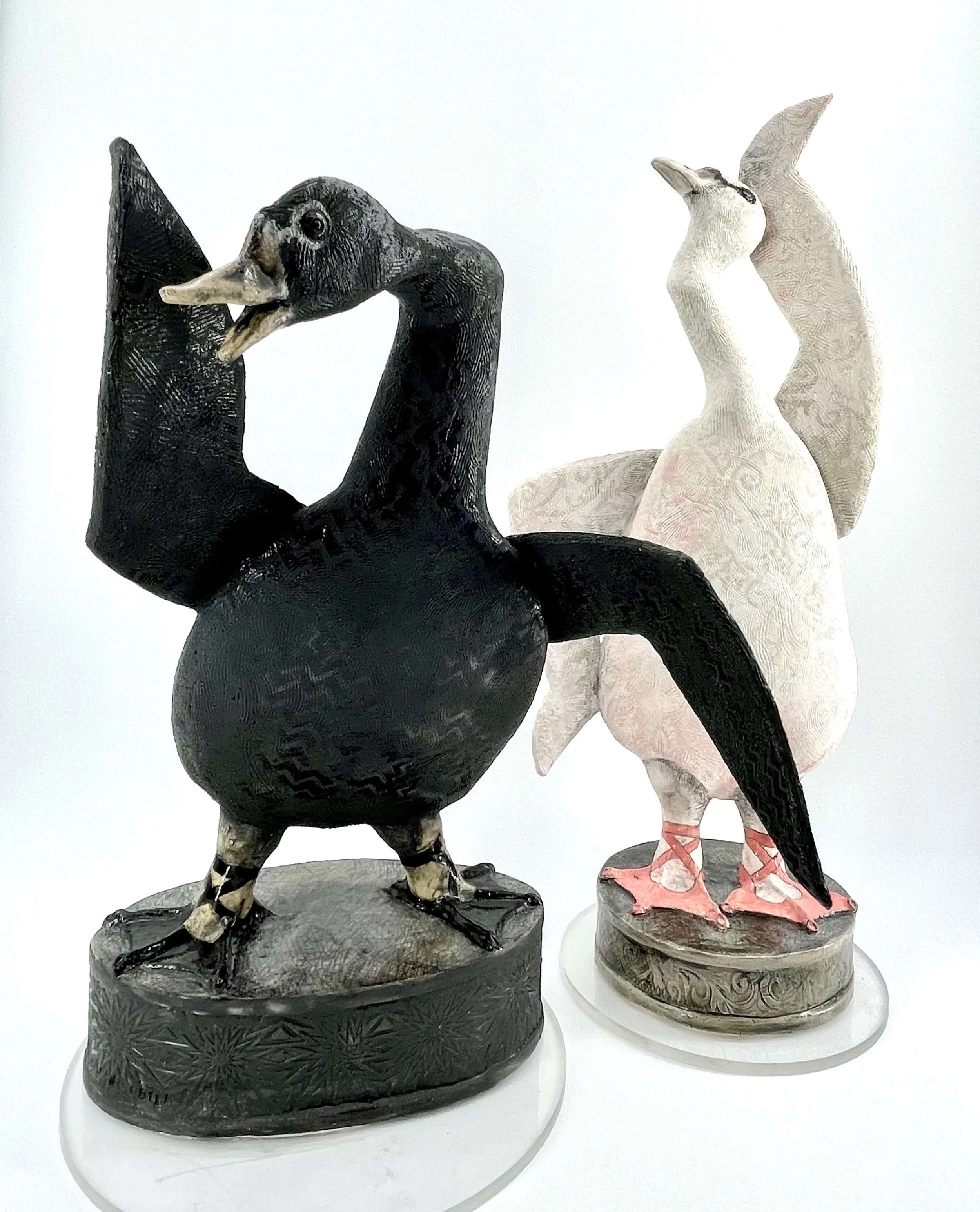
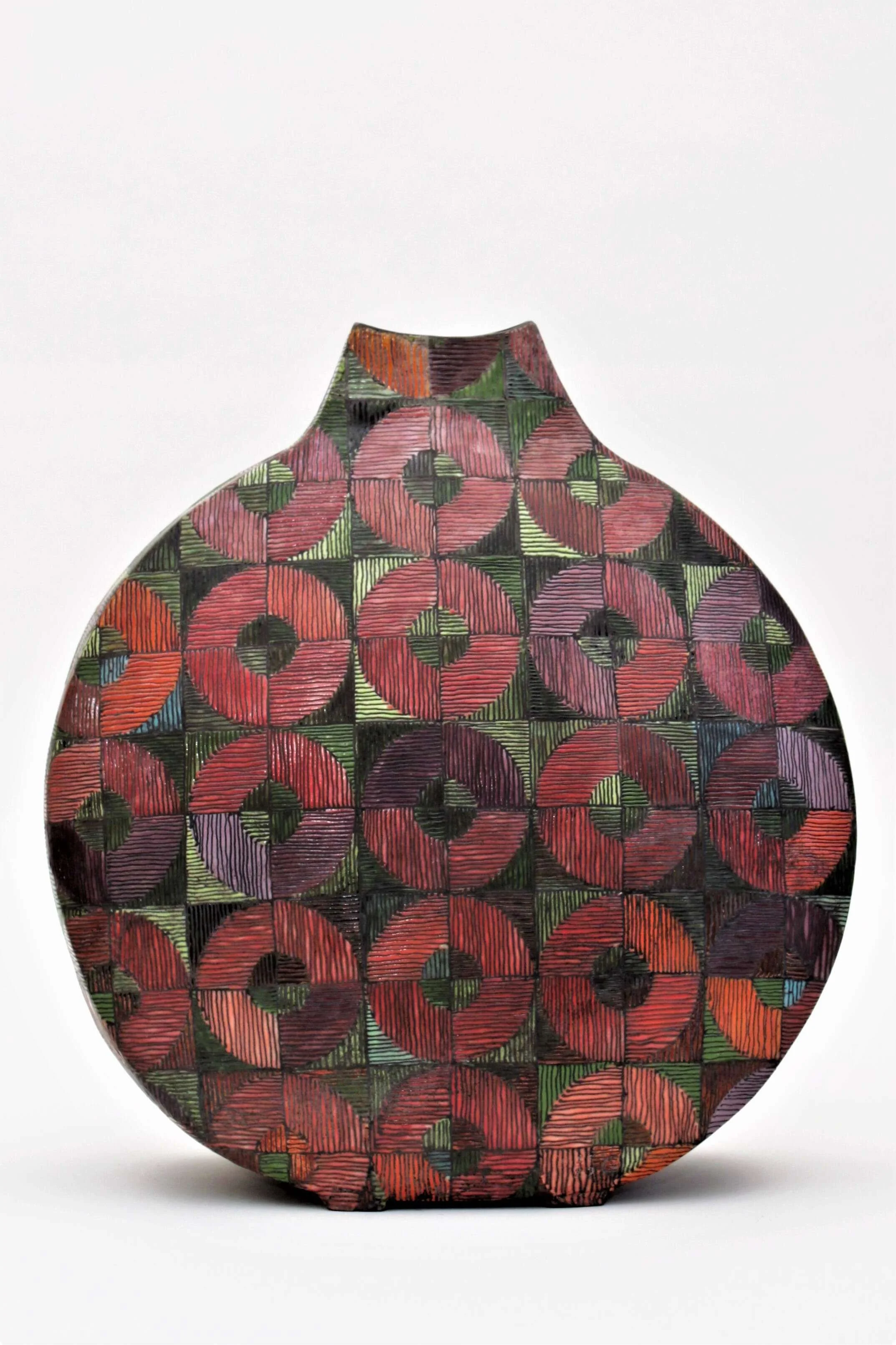
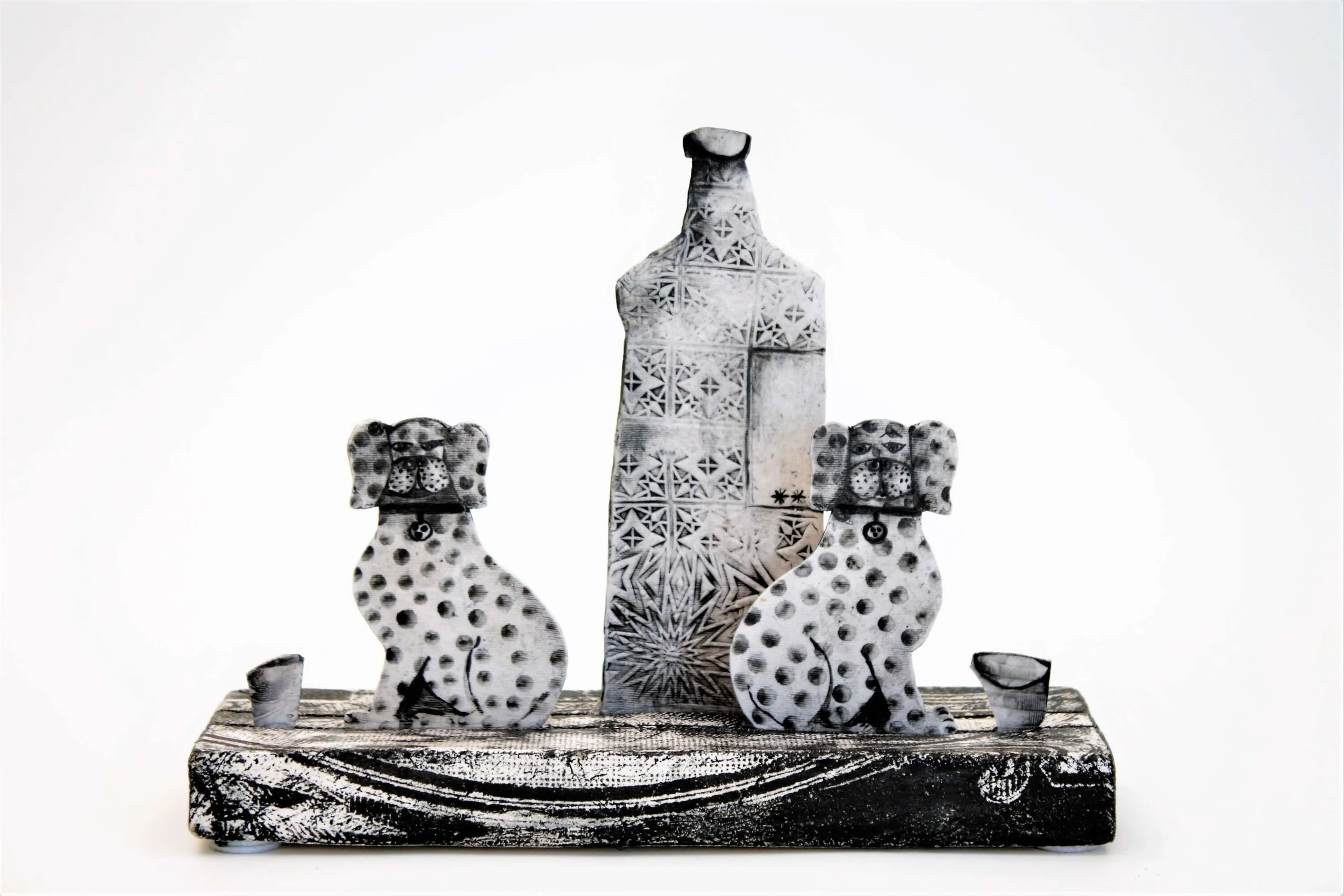
Vessels, objects or even figurative pieces on humans and animals that, thanks to their narrative potency, make you smile: Ute Naue-Müller's work resembles a "cabinet of curiosities" that is constantly being replenished. Regardless of whether she reaches deep into the engobe paint pot or is content with elegant shades of grey, white and black, her signature is unmistakable: opulent ornamentation follows fine gradations in stripes or field structure and leads to graphic decorations.
Ute Naue-Müller
Würzburger Str. 59 a
01187 Dresden
Germany
+49 (0) 3514-764341
Ute Naue-Müller's main areas of work well explained:
Glaze is a glass-like layer which, from a purely functional point of view, is mainly used to provide the porous shards underneath (term for a fired ceramic mass) with a waterproof, dense coating.
Engobe refers to a mixture of finely slurried clay liquefied with water, which is applied to raw or also bisqued ceramic workpieces for decoration.
Raku is an old firing technique from Asia, in which the low fired (approx. 1000 °), bisqued and glazed ceramics are taken out of the kiln red-hot and cooled shock-like in natural materials like leaves or sawdust and then quenched in water.
Thanks to its modern technology, the electrically powered kiln is a relatively safe firing method that can be used to fire at high temperatures.
Designation for ceramics which, with or without glaze after the firing process above 1200° C, has a hard, solid and dense body (term for a fired ceramic mass).
In the context of the „Internationalen Keramiktage Oldenburg“ , the term "unique vessel" is associated with special, artistic vessels.
In the context of the „Internationalen Keramiktage Oldenburg“ , the term "sculpture/object" refers to ceramics that are not subject to any function.