
Carolin Wachter
The white cylinder
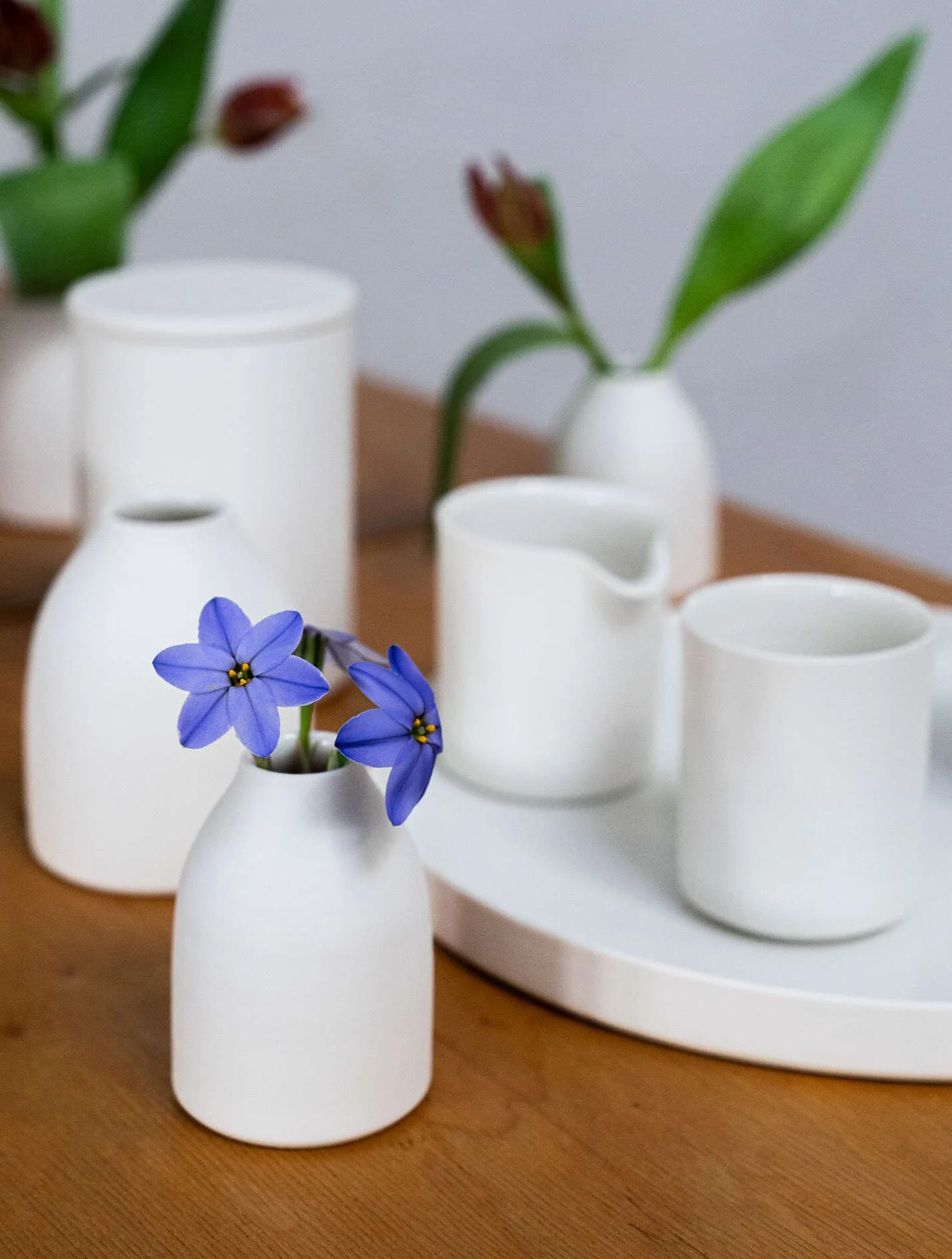
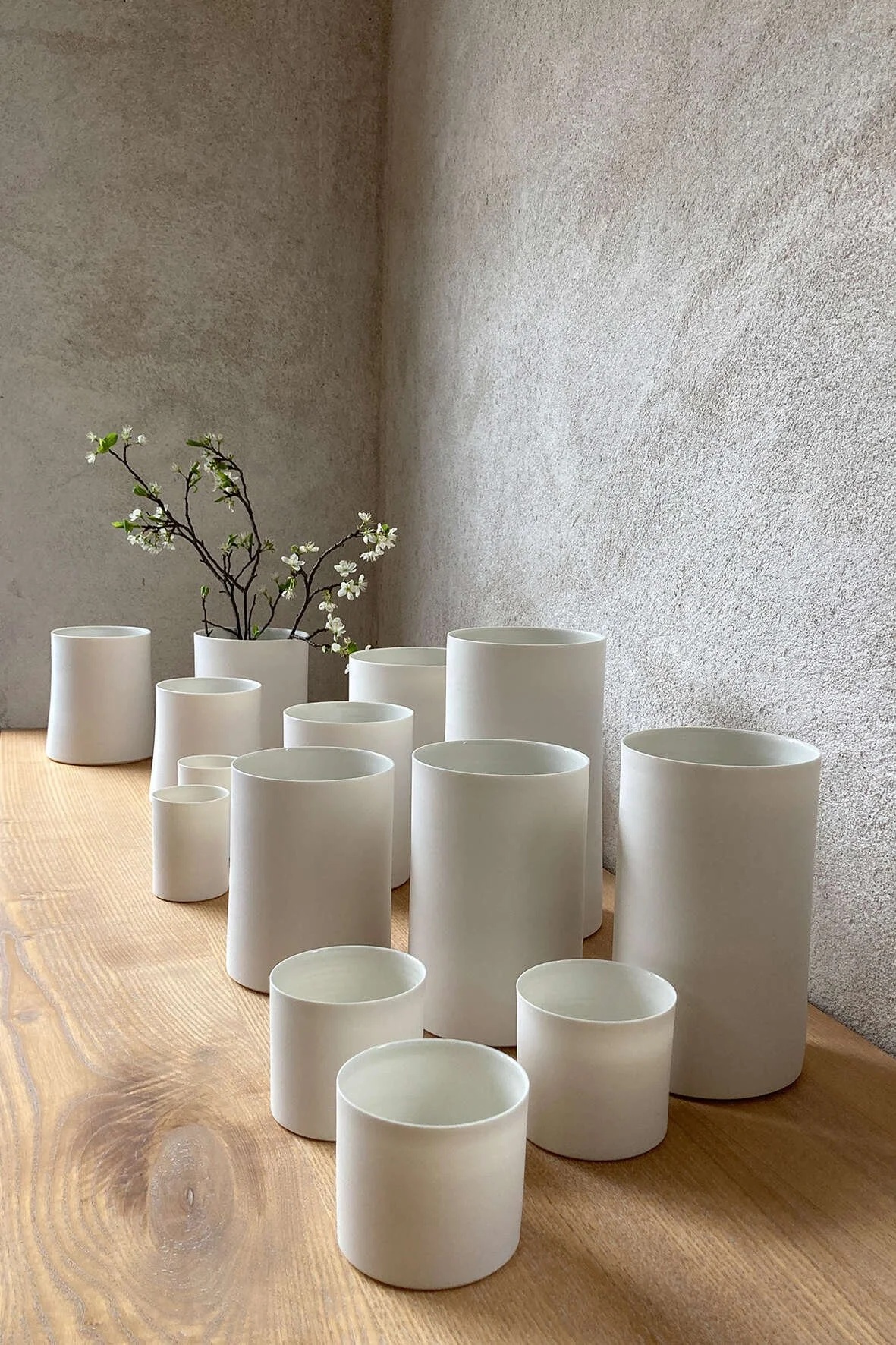
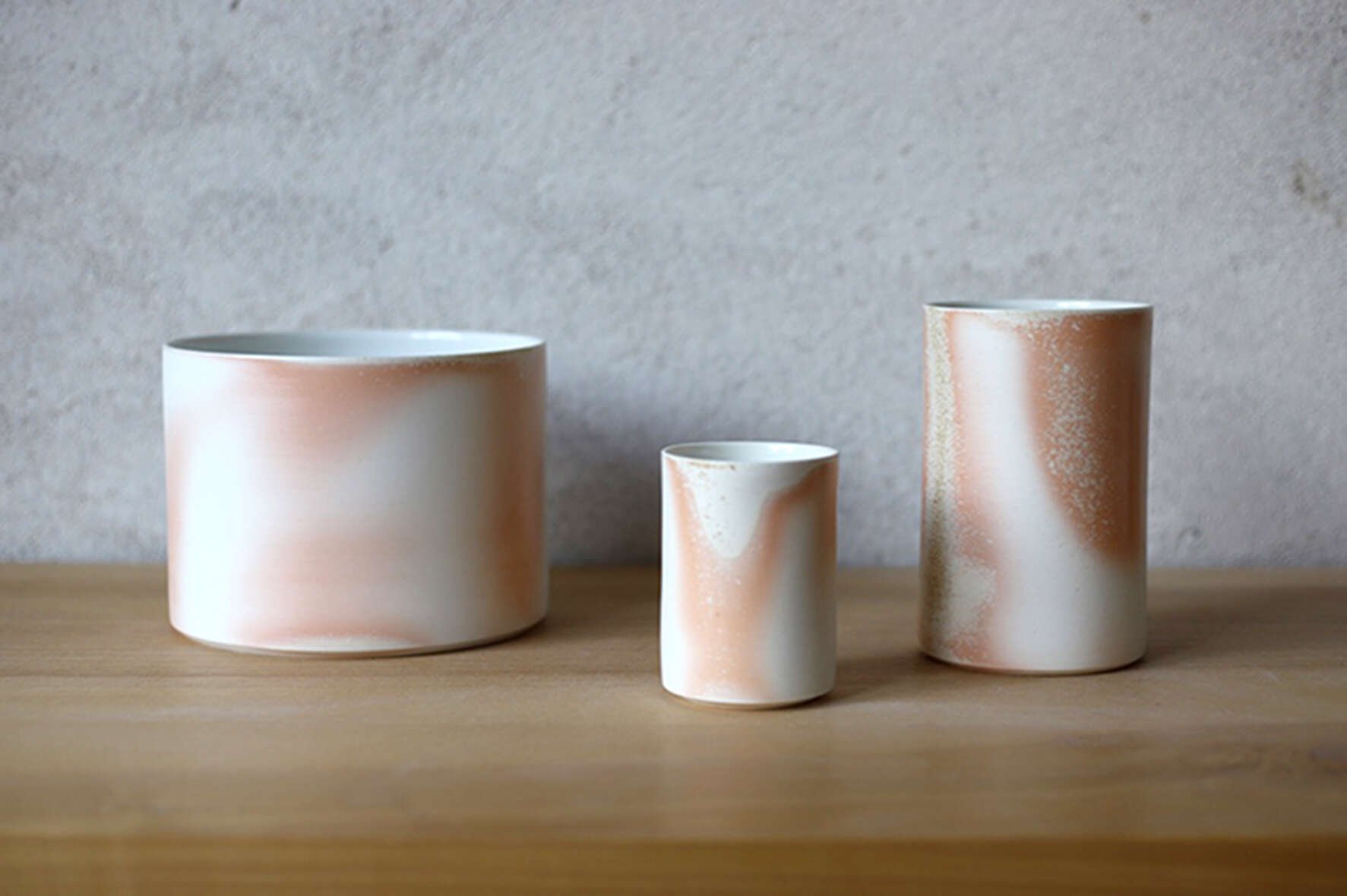
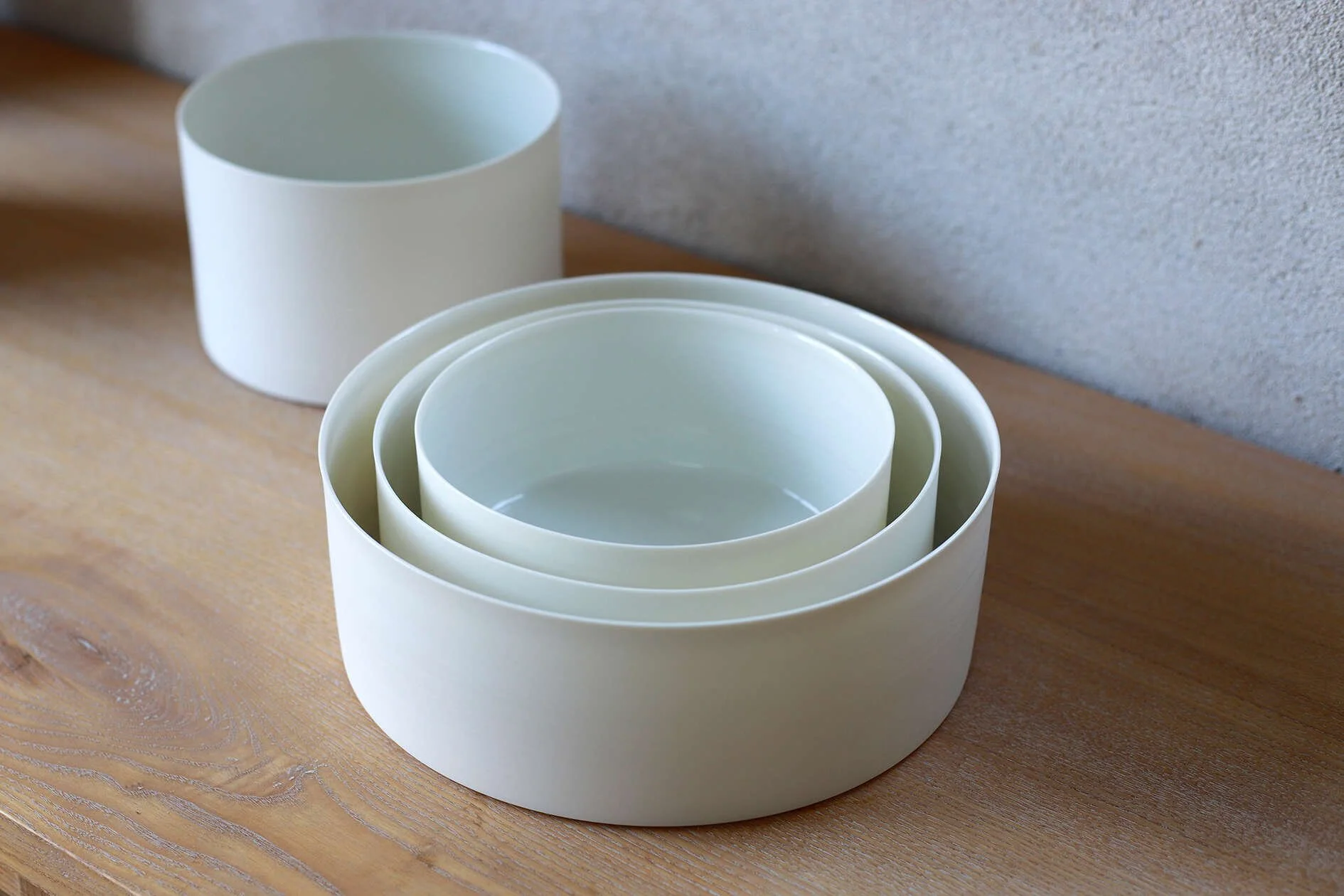
The theme of "vessel" artistically illuminated: Carolin Wachter's predominantly hand-turned, white porcelain objects have strictly sculptural and conceptual forms. Arranged in groups, they come together as installations in which the ivory-white ceramic forms come into contact with their surroundings and work within them. Fired at 1280 degrees and glazed transparent on the inside, they can also be used individually as vases or storage forms!
Carolin Wachter
Dr.-Külz-Straße 69
14542 Werder, Glindow
Germany
+49 (0) 163-9871775
www.wachter-porzellan.de
werkstatt[at]wachter-porzellan.de
@wachterporzellan
Carolin Wachter's work focus well explained:
Seladon refers to grey-green to blue-green thickly applied feldspar glazes whose special colouring comes from iron oxide.
The salt glaze is an approach glaze. While other glazes are applied before firing, the salt glaze is created during firing.
Glaze is a glass-like layer which, from a purely functional point of view, is mainly used to provide the porous shards underneath (term for a fired ceramic mass) with a waterproof, dense coating.
In fossil fuel furnaces fired with oil, gas, wood, coal or coke, the fire occurs in an open flame and reducing atmosphere.
Thanks to its modern technology, the electrically powered kiln is a relatively safe firing method that can be used to fire at high temperatures.
Designation for a ceramic material made of feldspar, kaolin and quartz, with dense, light-coloured to white shards (term for a fired ceramic mass)
In the context of the „Internationalen Keramiktage Oldenburg“ , the term "unique vessel" is associated with special, artistic vessels.
In the context of the „Internationalen Keramiktage Oldenburg“ , the term "sculpture/object" refers to ceramics that are not subject to any function.
The term "utility ceramics" is used in the context of the "International Ceramics Days Oldenburg" to refer to handmade ceramics which, no matter what form they take, are primarily geared to function.