
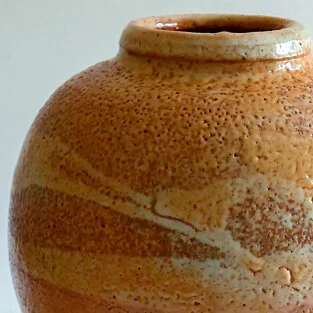


Salt glazes
The salt glaze is an approach glaze. While other glazes are applied before firing, the salt glaze is created during firing.


Crystal glaze
Crystal glazes are glazes in which crystals grow in the glaze during the firing process. They are formed during the cooling process and solidify with the glaze.


Faience/Majolica
This genre of pottery was born out of a desire to copy the brilliant white porcelain that could not be made in Europe until the 18th century because of a lack of kaolin.


Smoke blight
Smoke firing is a method of burning ceramics in open fires that has been in use since early times. People from different cultures and regions of the world used it to harden their ceramics and still do so today.

Capsule Fire
It refers to firing in a closed container (capsule) of refractory material in which the ceramics are placed.


Wood Stove Fire
In fossil fuel furnaces fired with oil, gas, wood, coal or coke, the fire occurs in an open flame and reducing atmosphere.

Electric kiln
Thanks to its modern technology, the electrically powered kiln is a relatively safe firing method that can be used to fire at high temperatures.

Terracotta
Terracotta comes from Latin and means "fired earth". Terracotta refers to a specific category of ceramic products made from gray,


Earthenware
Term for low-fired ceramics (below 1100° C) with coloured body (term for a fired ceramic mass), which is porous and water-permeable after the firing process.

Unique vessels
In the context of the „Internationalen Keramiktage Oldenburg“ , the term "unique vessel" is associated with special, artistic vessels.

Plastic/object
In the context of the „Internationalen Keramiktage Oldenburg“ , the term "sculpture/object" refers to ceramics that are not subject to any function.